How to Talk About Sex Education, Consent, and Body Safety With Autistic & Neurodivergent Children
Sex education for autistic and neurodivergent children is not one uncomfortable “talk.” It is an ongoing series of conversations about body safety, consent, privacy, relationships, emotions, and trust. When parents approach these conversations calmly and honestly, children are more likely to feel safe asking questions and making informed decisions as they grow.
Parents often feel nervous talking about sex education with their children.
Some worry about saying the wrong thing. Others wonder if they will introduce topics too early. Many families grew up in environments where these conversations simply did not happen at all. Add autism, ADHD, sensory differences, communication challenges, or social vulnerabilities into the mix, and the topic can suddenly feel even more overwhelming.
But one of the biggest takeaways from Brian Keene’s conversation with Cath Hakanson on the Autism Family Resource Podcast is this:
Sex education is not about one giant awkward conversation.
It is about creating ongoing moments of trust, safety, honesty, and connection.
For autistic and neurodivergent children especially, explicit teaching around body boundaries, consent, privacy, relationships, and safety can play a critical role in helping them navigate the world more confidently and safely.
Why Sex Education Matters for Neurodivergent Children
Many neurodivergent children process social information differently.
Some autistic children may miss subtle social cues or implied expectations that neurotypical children naturally absorb through observation. Others may interpret language literally, struggle with social boundaries, or need more direct explanations about relationships and consent.
This does not mean neurodivergent children are incapable of understanding these topics.
It simply means they often benefit from clearer, more intentional teaching.
Without guidance, children may turn to peers, social media, YouTube, pornography, or unreliable online sources to answer their questions. Unfortunately, those sources may provide confusing, unrealistic, or unsafe information.
Open conversations at home help create a safer foundation.
Sex Education Starts Earlier Than Most Parents Think
One of the most important ideas Cath discusses is that sex education starts long before puberty.
Parents often think about “the talk” happening around middle school or the teenage years. But in reality, many foundational concepts begin much earlier.
For younger children, sex education can include:
• Teaching correct body part names • Helping children understand public versus private • Teaching consent in everyday situations • Helping children identify emotions • Respecting body autonomy • Talking about safe and unsafe touch • Teaching healthy boundaries
For example, when a child learns they do not have to hug someone if they feel uncomfortable, they are already learning consent and body autonomy.
When a parent teaches a child the correct names for body parts, they are helping build safety and communication skills.
These small conversations matter more than one large speech later on.
What Is an “Askable Parent”?
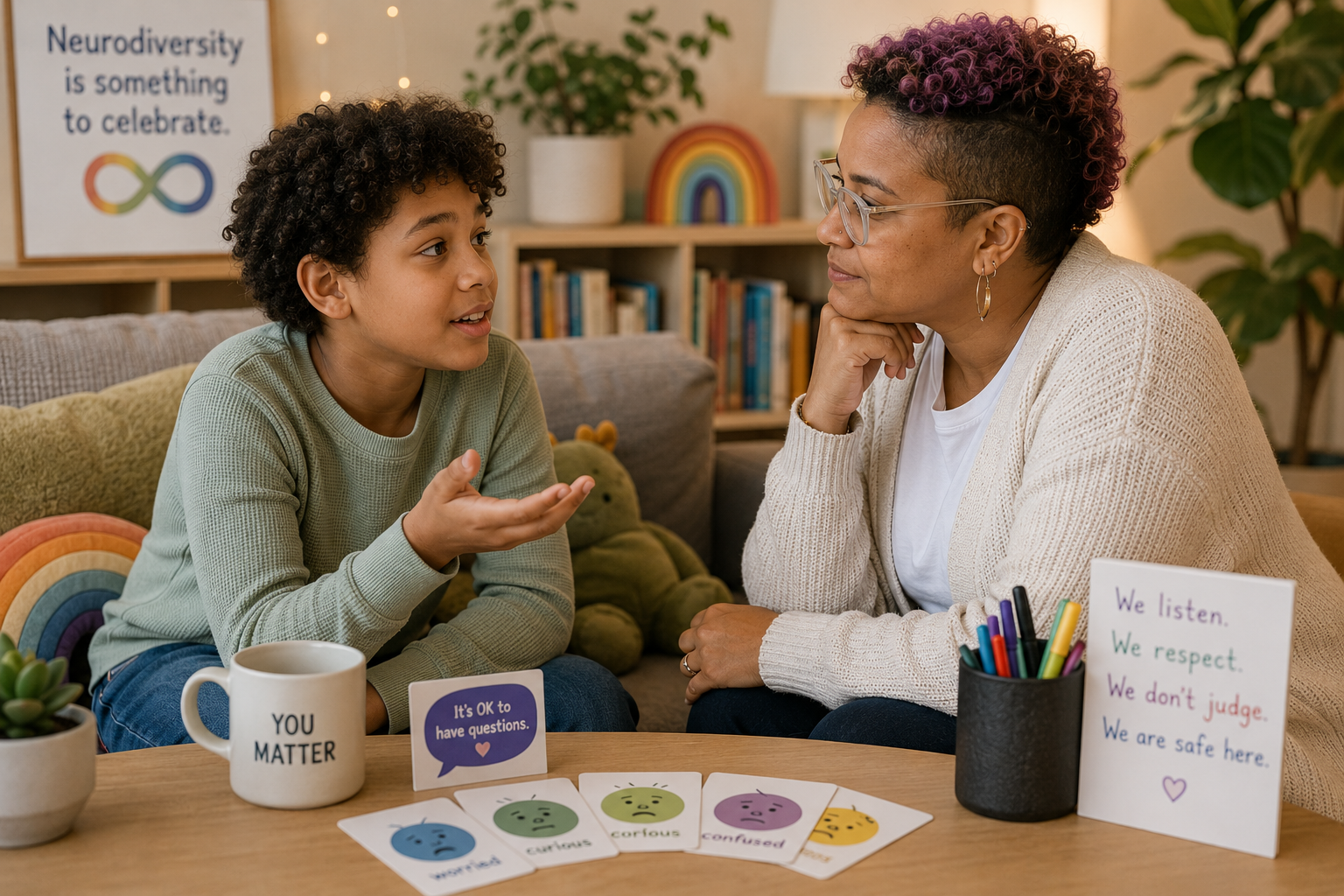
Cath introduces a concept called becoming an “askable parent.”
This means creating an environment where children feel safe bringing questions, confusion, worries, or awkward topics to you.
Children are naturally curious. They hear things at school. They encounter content online. They ask unexpected questions at the grocery store, in the car, or five minutes before bedtime.
An askable parent does not need to know every answer perfectly.
Instead, the goal is to respond calmly enough that the child feels safe returning in the future.
This can sound like:
• “That’s a good question.” • “Let’s talk about that.” • “I’m glad you asked me.” • “I don’t know the answer yet, but we can figure it out together.”
For autistic and neurodivergent children, this safe communication pattern can be especially important because they may already experience confusion or anxiety around social situations.
When parents stay approachable, children are more likely to ask questions before unsafe situations happen.
Why Honest Answers Matter
One powerful point from the episode is that children eventually recognize when adults avoid, dismiss, or distort information.
When parents repeatedly dodge questions, children may stop asking.
That silence can create shame or confusion around bodies, relationships, and safety.
This does not mean parents need to provide graphic or overwhelming information. Instead, conversations should remain developmentally appropriate while still being truthful.
A five-year-old and a fifteen-year-old may receive different levels of detail, but both deserve honest answers.
For neurodivergent children who may think concretely or literally, clarity can be especially important.
Consent Starts With Everyday Parenting
Consent is often discussed only in the context of dating or sexual relationships.
But children learn consent much earlier through everyday experiences.
Some examples include:
• Asking before tickling • Respecting a child’s “no” when appropriate • Allowing children to choose how they greet relatives • Teaching children to respect others’ boundaries • Helping children identify uncomfortable feelings
This does not mean children never hear “no” themselves or avoid all expectations. Parents still guide behavior and maintain safety boundaries.
But children also need opportunities to experience that their body belongs to them.
For autistic children especially, learning to trust their own discomfort can be incredibly important for long-term safety.
Teaching Public vs. Private Clearly
Many autistic and neurodivergent children benefit from explicit teaching around public and private behaviors.
Some social rules that neurotypical children pick up indirectly may need more direct explanation.
Topics might include:
• Which body parts are private • Where it is appropriate to change clothes • Public versus private conversations • Safe places for self-touch or masturbation • Bathroom privacy • Online privacy and safety
Visual supports, social stories, books, and repeated practice can all help reinforce these ideas.
The goal is not shame.
The goal is clarity, safety, and understanding.
Information Is Not Permission
Many parents fear that talking about sex, consent, or relationships will somehow encourage unsafe behavior.
Cath challenges this fear directly in the episode.
“Information isn’t permission. It actually empowers kids.”
Children make safer decisions when they understand their bodies, boundaries, relationships, and emotions.
Silence does not prevent curiosity.
It simply removes trusted guidance from the conversation.
When parents provide accurate, calm, and supportive information, children are better equipped to recognize unsafe situations, ask questions, and seek help if needed.
Supporting Neurodivergent Teens
As neurodivergent children grow into teenagers, conversations may naturally expand into topics like:
• Dating • Online relationships • Sexting • Consent • Pornography • Peer pressure • Romantic relationships • Sexual orientation and gender identity • Safe relationships
Many autistic teens benefit from direct communication around social expectations because subtle social dynamics may not always feel obvious.
It can also help to discuss scenarios openly.
Instead of assuming understanding, parents can walk through examples together:
• “How would you know if someone feels uncomfortable?” • “What would you do if someone asked for a private photo?” • “What are signs of a respectful relationship?”
These conversations are not about fear.
They are about preparation and safety.
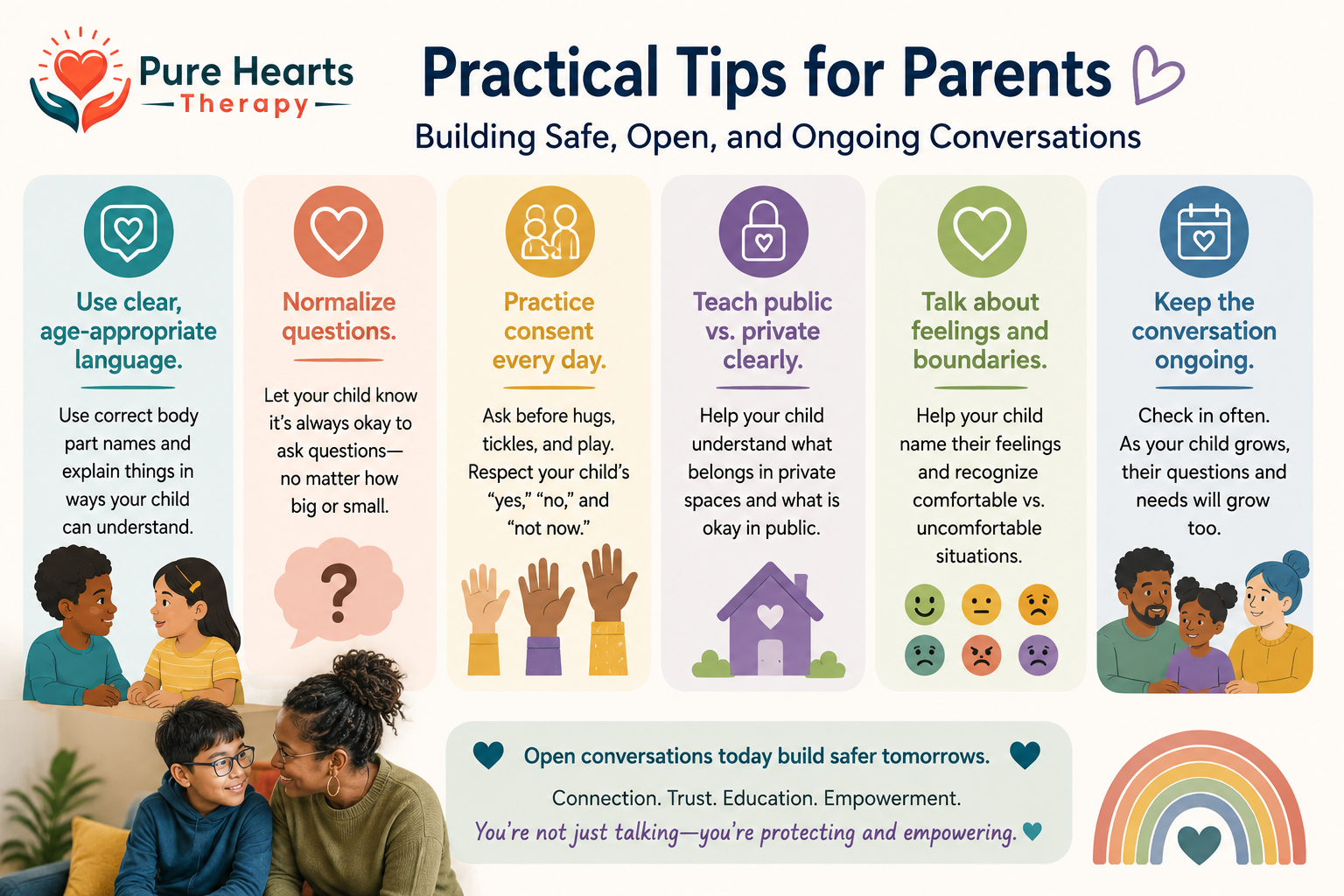
Practical Tips for Parents Getting Started
If this topic feels overwhelming, start small.
You do not need a perfect script.
You do not need to cover everything today.
Some simple starting points include:
Use Correct Body Part Names
Using accurate names helps children communicate clearly and supports body safety.
Normalize Questions
Try responding calmly when children ask awkward questions.
Read Books Together
Books can create natural conversation opportunities without putting all the pressure on parents.
Practice Consent Daily
Teach consent through everyday interactions, not just lectures.
Keep Conversations Ongoing
Short conversations over time are often more effective than one giant “talk.”
Why These Conversations Matter
Parents of neurodivergent children already carry enormous responsibilities.
Adding another topic to the list can feel exhausting.
But sex education, consent, and body safety conversations do not need to be perfect.
They simply need to stay open.
When children feel safe asking questions, respected in their boundaries, and informed about their bodies, they are more likely to grow into adults who understand consent, relationships, safety, and self-advocacy.
And for many families, that begins with small everyday conversations.
Resources Mentioned
Sex Ed Rescue:https://sexedrescue.com/
Sex Ed Shop:https://sexedshop.com/
Sex Ed Membership for Parents:https://sexedshop.com/products/sex-ed-membership
SECCA:https://www.secca.org.au/
Cath Hakanson Instagram:https://www.instagram.com/sexedrescue/
Related Resources From Pure Hearts Therapy
You may also find these articles helpful:
• Sensory Processing 101: Understanding Your Child’s Sensory Needs
• Positive Behavior Strategies for Neurodivergent Children at Home and School
• Understanding Autism Meltdowns: What They Are and How to Support Your Child
• Neurodiversity-Affirming Therapy: Supporting Your Child’s Unique Strengths
Explore more family resources at:https://pureheartstherapy.com/blog