Summer Break Prep: Planning a Sensory-Friendly Summer for Your Child

Summer can feel supportive instead of stressful
Summer break can be exciting, but for kids with developmental disabilities—especially autistic children—sudden changes to routine can be overwhelming. With some planning, you can create a summer that’s both fun and supportive. Here’s how:
1. Keep a Consistent Routine (with Flexibility)
Many kids thrive on predictability. A daily structure—even a loose one—helps reduce anxiety during the unstructured summer months.
Create a daily flow: Morning wake-up and breakfast around the same time, a planned activity, quiet time after lunch, and so on.
Visual schedules help: Use a calendar or chart with fun icons for “park day,” “therapy day,” or “visit grandma.” Include therapy appointments so they stay part of the routine.
Stay flexible: The schedule doesn’t need to be strict; the goal is predictability, not rigidity.
2. Sensory-Friendly Activities
Summer is a great time to incorporate sensory-rich experiences that are fun and therapeutic:
Water play: Backyard sprinklers, kiddie pools, water balloon toss, or even watering plants with a hose. For sensitive children, try quiet morning swim times or bathtub “beaches” with toys and sand buckets.
Pure Hearts note: Summer aquatic therapy sessions can double as fun water play while supporting developmental goals.
3. Outdoor but Not Overwhelming
Pick the right time: Early mornings or late afternoons are cooler and less crowded.
Accessible parks: Look for equipment like smooth swings with harnesses.
Bring sensory supports: Sunglasses, hats, and headphones can help moderate stimuli.
Short play sessions: 15–20 minutes of focused outdoor play is often better than long outings.
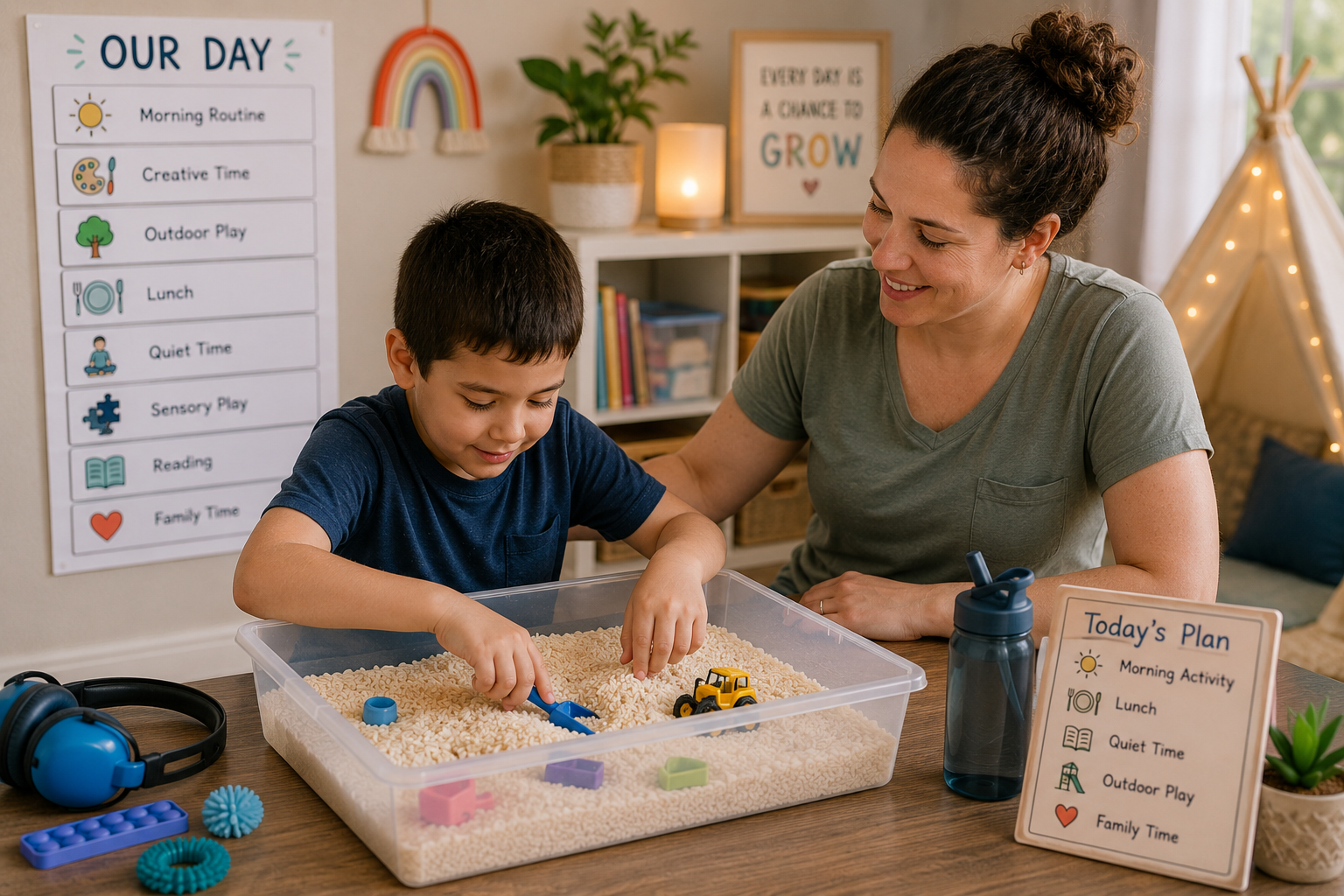
Structured indoor activities can help children stay regulated, engaged, and supported during hot summer days.
4. Cool Indoor Fun
Arizona summers often mean staying indoors during the hottest parts of the day. Use this time for developmental play:
Sensory bins: Fill a plastic tub with rice or beans and hide small toys for tactile exploration.
Obstacle courses: Crawl under chairs, jump on couch cushions, or use pillows for safe climbing.
Theme days: Monday = art day, Wednesday = cooking day (like making trail mix together).
Screen time: Some is okay—choose educational shows and use a visual timer to set limits.
5. Social Opportunities
Maintaining peer interaction over the summer is important:
Summer camps: Look for adaptive programs, like the Miracle League or inclusive camps through local YMCAs or The Center for Habilitation.
Playdates: If camps aren’t possible, plan weekly get-togethers at splash pads, playgrounds, or homes.
6. Maintain Therapy Momentum
Avoid long breaks in therapy when possible to prevent regression:
Short summer schedules: Even monthly check-ins can help.
Home programs: Therapists can provide weekly exercises—fine motor, balance, or language practice.
Playful integration: Schedule therapy activities after breakfast or during structured times. Use reward charts to motivate participation.
7. Travel and Change Preparation
If your family plans vacations or trips:
Prepare in advance: Use countdown calendars, photos, or videos of the destination.
Bring familiar items: Favorite pillows, white noise machines, or snacks can help maintain comfort.
Maintain routines: Keep bedtime rituals and small daily constants even while away.
8. Take Care of You (and Avoid Over-Scheduling)
Balancing structure with downtime is essential:
Quiet days: Recharge between busy outings and therapies.
Tag-team help: Use partners or respite workers for energy-intensive days.
Respite hours: Schedule a caregiver occasionally to get a break or spend one-on-one time with siblings.
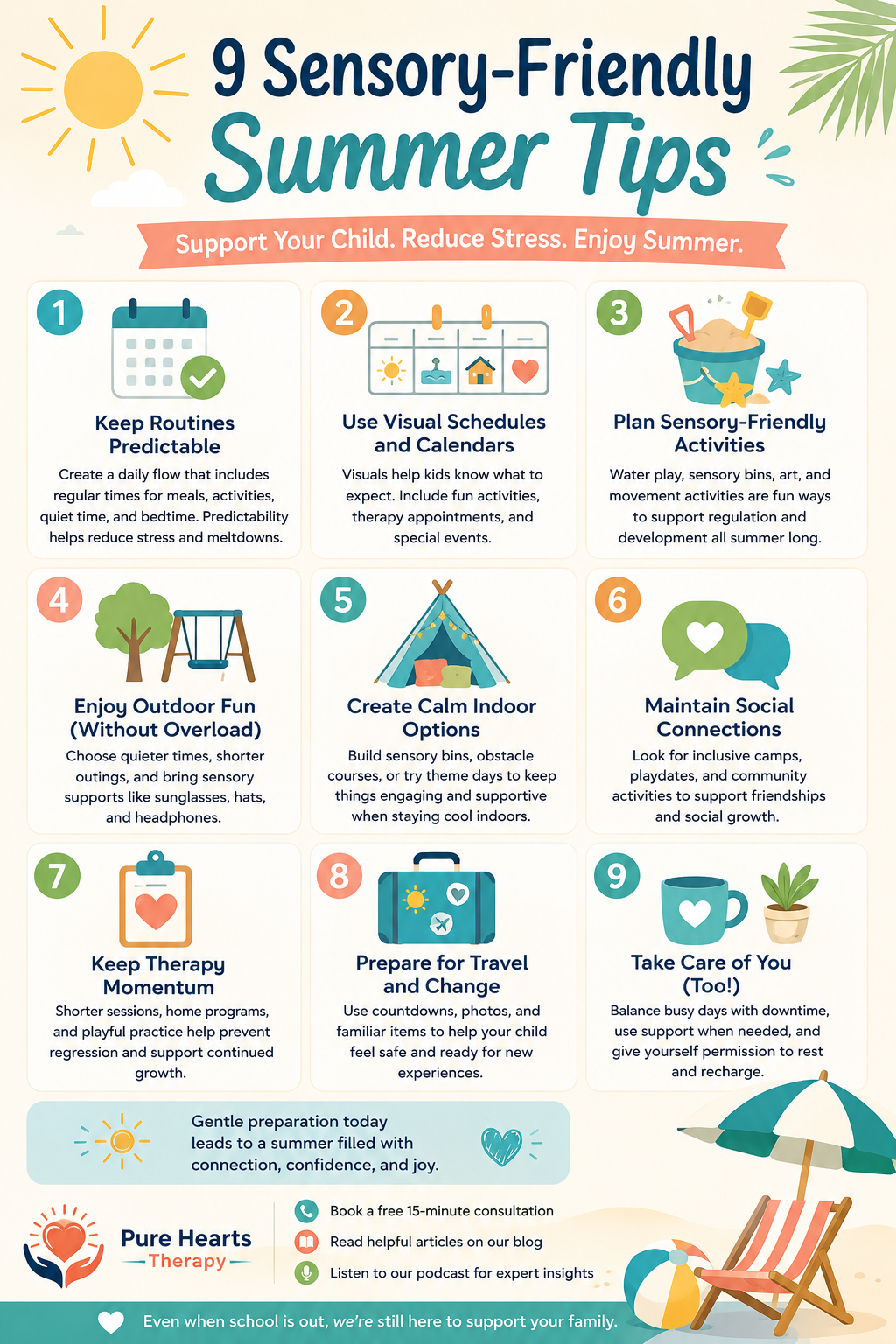
Simple routines, sensory-friendly activities, and thoughtful planning can help create a calmer, more supportive summer for neurodivergent children and their families.
9. Back-to-School Transition
As summer ends, start gently shifting bedtime/wake times and preview school routines. Preparing gradually will make the back-to-school transition smoother. Until then, enjoy summer’s unique learning opportunities.
Even when school is out, we’re still open!🌞
📞 Book your free 15-minute consultation to get personalized guidance.
📚 Read more on our blog for helpful articles, sensory-friendly ideas, and real-world strategies.
🎧 Listen to our podcast for expert insights and conversations with other families.