Race, Autism, and Parenting: How to Support Your Child with Understanding and Confidence
Parenting an autistic child requires more than strategies. It requires understanding. This guide explores how race, culture, and neurodiversity intersect, and how parents can shift from control to connection by supporting routines, allowing processing time, and embracing their child’s unique way of experiencing the world.

Supporting Your Child with Understanding & Confidence
Introduction
Many parents wonder if the world will truly understand their child.
That question becomes even more complex when race, culture, and disability intersect. For families raising neurodivergent children, parenting is not just about development. It is about advocacy, identity, and navigating systems that may not always recognize or support differences.
This conversation highlights a powerful shift. Moving away from trying to “fix” behaviors and toward understanding what your child actually needs.
Understanding the Intersection of Race and Autism
For many families, race and disability do not exist separately. They overlap in ways that shape everyday experiences.
Historically, both communities have faced misunderstanding, exclusion, and lack of representation. When these identities intersect, families may encounter additional barriers, including:
• Limited awareness in public systems
• Misinterpretation of behaviors
• Reduced access to culturally responsive support
Recognizing this intersection helps parents better understand the environment their child is navigating and why advocacy is often necessary.
Why Processing Time Matters More Than Compliance
One of the most common misunderstandings in parenting neurodivergent children is interpreting delayed responses as defiance.
In reality, many autistic children need time to:
• Process language
• Transition between tasks
• Regulate their nervous system
Instead of repeating instructions or escalating expectations, try:
• Pausing after giving directions
• Using simple, clear language
• Allowing extra time before expecting a response
This shift alone can dramatically reduce frustration for both parent and child.

Predictability and routines can help children feel emotionally safe and regulated.
The Power of Routines in Building Safety
Routines are not just preferences. They are tools for regulation.
For many neurodivergent children, routines provide:
• Predictability
• Emotional safety
• Reduced anxiety
When routines are disrupted, children may appear resistant or overwhelmed. But often, they are trying to regain a sense of stability.
Parents can support this by:
• Giving advance notice before transitions
• Keeping consistent daily structures
• Allowing flexibility when possible without removing predictability
You can learn more about supporting sensory needs here:
https://pureheartstherapy.com/blog/sensory-processing-101
Letting Go of Public Judgment
One of the hardest parts of parenting is managing how others perceive your child.
Stares, comments, or misunderstandings can create pressure to “correct” behaviors in public. But over time, many parents realize something important.
Your child’s needs matter more than other people’s opinions.
Instead of focusing on how things look, try focusing on:
• What your child needs in that moment
• How you can support regulation
• Whether intervention is necessary or not
This mindset shift helps reduce stress and builds confidence in your parenting approach.
Why Joining Your Child’s World Builds Connection
Connection is the foundation of growth.
When parents join their child’s world instead of pulling them away from it, something powerful happens. Trust builds.
This might look like:
• Participating in stimming behaviors
• Engaging in preferred activities
• Following your child’s lead during play
Rather than trying to stop behaviors, understanding their purpose helps create a stronger bond.
Explore more ways to support connection here:
https://pureheartstherapy.com/blog/creating-a-supportive-home-environment
Shifting from “Why” to “What Do They Need?”
A simple question can transform your parenting approach.
Instead of asking:
“Why is my child doing this?”
Try asking:
“What does my child need right now?”
This shift moves parenting from reaction to understanding.
It encourages:
• Curiosity over control
• Support over correction
• Connection over compliance
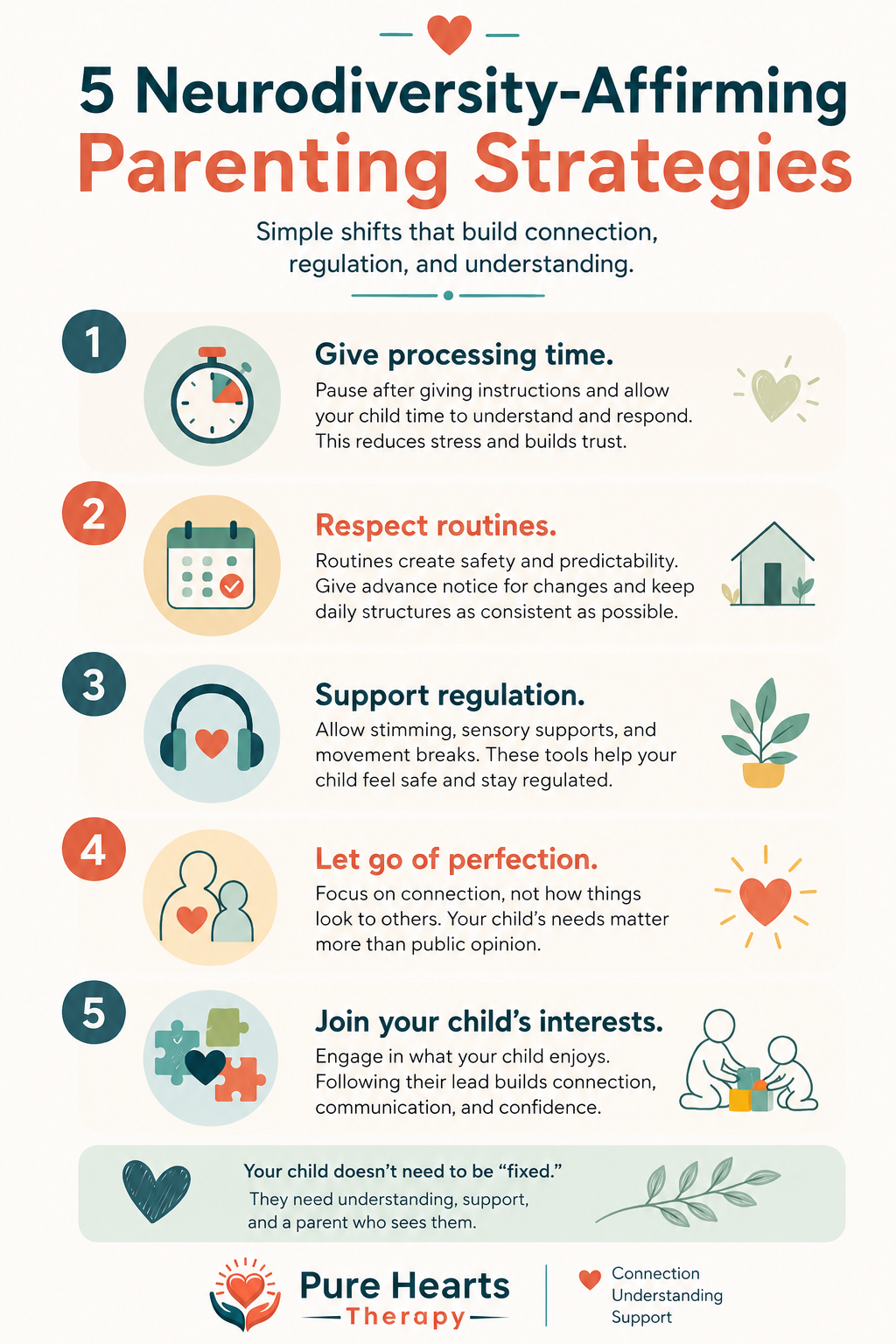
Small parenting shifts can strengthen connection, regulation, and emotional safety.
Practical Strategies for Parents
Here are simple, effective ways to apply these ideas:
1. Give processing time
Pause after giving instructions and allow your child time to respond.
2. Respect routines
Avoid unnecessary disruptions and prepare your child for transitions.
3. Support regulation
Allow stimming and sensory strategies that help your child feel safe.
4. Let go of perfection
Focus on connection rather than how things appear to others.
5. Join their interests
Engage in what your child enjoys to build trust and communication.
Why This Matters for Families
At the heart of parenting is a relationship.
When we move away from trying to fit children into expectations and instead learn who they are, everything changes. Growth becomes more natural. Connection becomes stronger. And families feel more supported.
Your child is not behind. They are on their own path.
Conclusion
Parenting a neurodivergent child is not about having all the answers.
It is about staying curious, being patient, and choosing connection again and again.
When we see our children as whole, capable, and worthy of understanding, we create a world where they can truly thrive.