
In-Home Pediatric Aquatic Therapy in Arizona
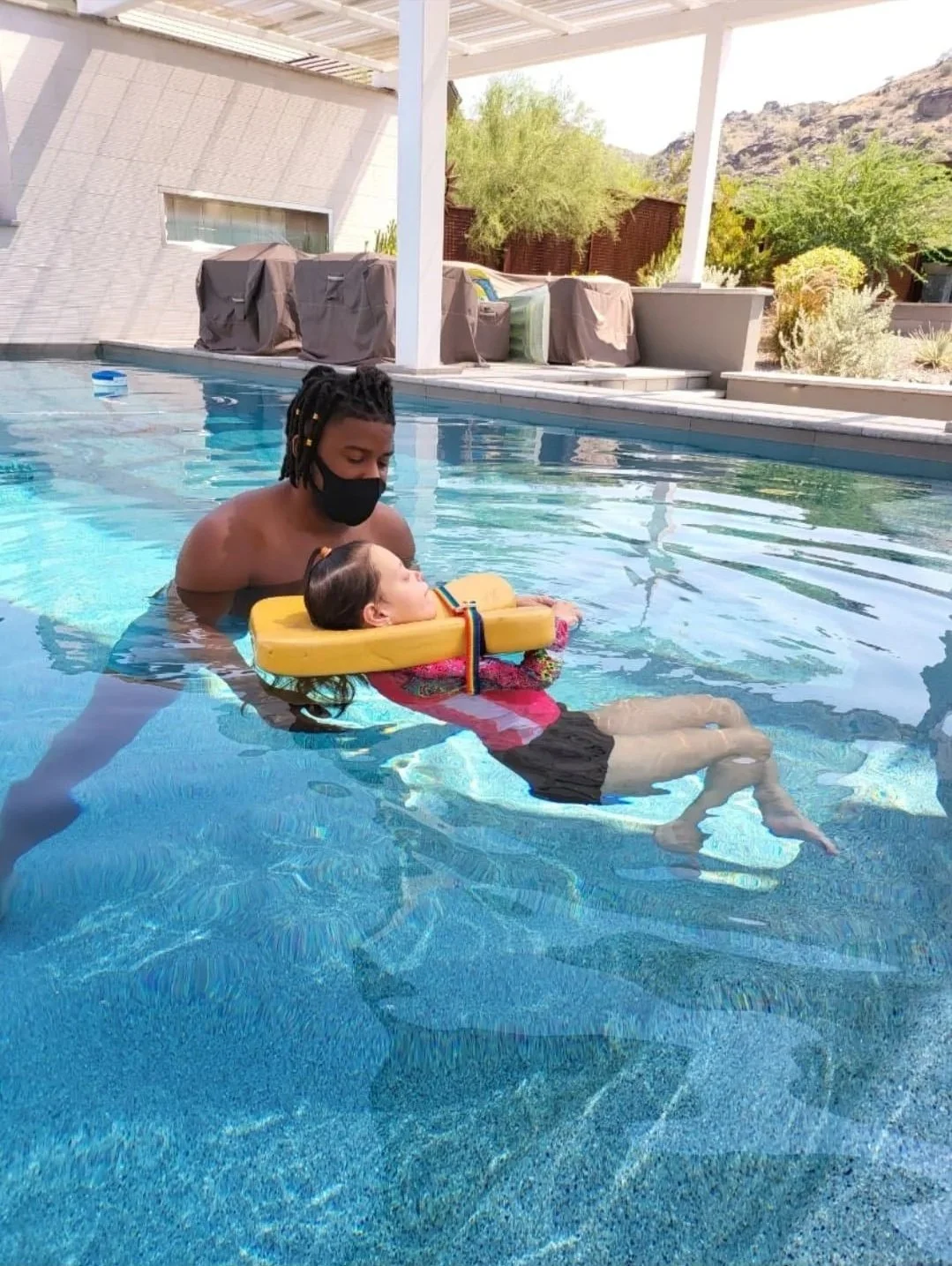
Aquatic therapy uses the unique properties of water to help children build strength, coordination, sensory regulation, and confidence in movement. Delivered by a licensed occupational or physical therapist, it is goal-driven and medically informed — not swim lessons.
What Aquatic Therapy Can Help With
Aquatic therapy may support your child with:
• Balance and postural control
• Core strength and endurance
• Motor planning and coordination
• Sensory regulation and body awareness
• Emotional regulation
• Joint stability and flexibility
• Gait training and movement patterns
• Confidence with movement
• Water safety awareness
For some children, the pool becomes a place where movement feels possible in ways it does not on land.
How Aquatic Therapy Works
Water supports therapy goals because:
• Buoyancy reduces joint stress
• Hydrostatic pressure provides calming deep pressure
• Natural resistance builds strength
• Warm water may reduce muscle tightness
Physical therapy in the water often focuses on:
• Gross motor development
• Gait training
• Lower extremity strength
• Endurance
• Spasticity management
• Cardiovascular conditioning
Who May Benefit from Aquatic Therapy?
Aquatic therapy is often helpful for children with:
• Cerebral palsy
• Autism and sensory processing differences
• Hypotonia or hypertonia
• Developmental delays
• Joint instability
• Coordination challenges
Physical Therapy vs Occupational Therapy in the Pool
Both physical therapists and occupational therapists may provide aquatic therapy. The difference lies in the clinical goal.
Occupational therapy in the water often focuses on:
• Sensory regulation
• Body awareness and proprioception
• Motor planning
• Bilateral coordination
• Core stability for daily activities
• Emotional regulation
What to Expect
• 30–45 minute one-on-one session with a licensed therapist
• Structured, goal-driven activities presented through play
• Parent observation or participation when appropriate
• Offered based on pool availability and weather conditions
It may look like fun. It is — with purpose.
Interested in exploring whether aquatic therapy is a good fit for your child?
How Aquatic Therapy Fits Into Your Child’s Plan
Aquatic therapy is not a separate service. It is delivered as part of your child’s existing occupational or physical therapy plan of care.
If your child receives OT, aquatic therapy may replace a regularly scheduled OT session when clinically appropriate. If your child receives PT, it may replace a PT session.
Sessions remain goal-driven and aligned with authorized services — simply delivered in a different therapeutic environment.
How Aquatic Therapy Fits Into Your Child’s Plan
Aquatic therapy is provided as part of your child’s existing occupational or physical therapy services. It replaces a regularly scheduled OT or PT session when clinically appropriate and remains directly tied to your child’s therapy goals.